I Don’t Always Listen to My Nurse Wife: A Designer’s Review
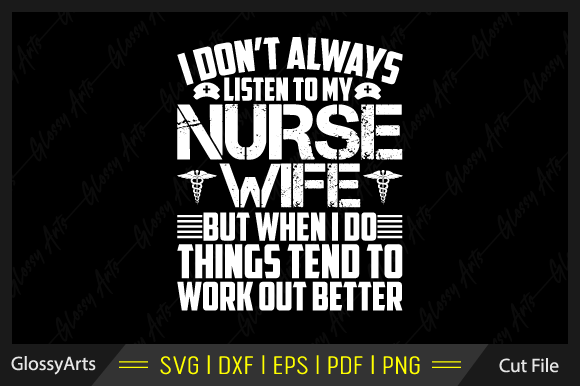
As a designer who has spent years digitizing patterns and testing them on everything from stiff canvas to delicate jersey, I approach every new machine embroidery design with a critical eye. We all know that what looks crisp on a computer screen does not always translate perfectly to thread and fabric. When I first pulled up the file for I Don t Always Listen to My Nurse Wife, my immediate reaction was one of cautious optimism. This is a humorous, niche graphic that relies heavily on typography and attitude, which presents specific challenges for any embroidery project.
This piece falls squarely into the Crafts category, specifically under Graphics meant for digital application. It is crucial to remember that this is a digital embroidery file download. You are not receiving a physical patch or shirt. The images provided in the listing are merely mockups to help you visualize the potential of the design on various gift items. As an experienced reviewer, I look past the marketing photos to evaluate how this design will actually behave under the needle.
First Impressions and Visual Personality
The mood of I Don t Always Listen to My Nurse Wife is playful, slightly rebellious, and deeply affectionate in a tongue-in-cheek way. It captures a very specific dynamic common in healthcare households. Visually, the layout appears balanced, but the success of this design hinges entirely on legibility. In embroidery, small text can easily become a blob of thread if the stitch density is too high or if the font choice is too thin.
From a design perspective, this graphic feels like it belongs on casual, comfortable items. It is not a formal motif. It screams "weekend wear" or "home comfort." The visual personality suggests a mix of bold statement lettering, likely utilizing a combination of satin stitch for larger elements and perhaps running stitch or smaller satin columns for finer details. If the digitizer has done their job well, the transition between these stitch types should be seamless, avoiding jumps that could snag during wear.
Real-World Application: The Sweatshirt Test
To truly evaluate this design, I imagined a real-life scenario: a custom order for a local nurse’s husband who wanted a unique anniversary gift. I decided to test the concept mentally on a mid-weight cotton blend sweatshirt. This is a popular choice for custom apparel because it provides a stable surface for stitching.
When placing I Don t Always Listen to My Nurse Wife on the left chest area of a sweatshirt, the scale needs to be carefully considered. If the text is too small, the humor is lost because the recipient cannot read it from a conversational distance. If it is too large, it may distort the fabric or feel heavy. For a standard adult medium sweatshirt, I would recommend sizing the design to approximately 4 to 5 inches wide. This allows the letters to breathe and ensures that the thread colors pop against the fabric.
This design also works exceptionally well as a tote bag design. Canvas bags have a tight weave that supports embroidery beautifully, making the text sharp and clear. It transforms a simple grocery carrier into a conversation starter, perfect for a personalized gift that shows off the buyer’s sense of humor. For Etsy sellers and small shop product lines, this versatility is a major selling point. It allows you to offer the same design assets across multiple product categories without needing to re-digitize the file.
Navigating Fabric Challenges and Stitch Density
While the design is charming, it requires careful handling on certain materials. Text-based designs are notoriously difficult on textured fabrics like terry cloth towels or fuzzy fleece blankets. The loops of the fabric can swallow thin lines of stitching, rendering the message unreadable. If you plan to use I Don t Always Listen to My Nurse Wife on a kitchen towel or a plush blanket, you must use a cut-away stabilizer to provide a firm foundation. Even then, avoid placing it directly over thick seams.
Another critical consideration is stretchy fabric. If you are embroidering this onto a fitted t-shirt or a baby onesie, the natural stretch of the knit can distort the text. A fill stitch background might help stabilize the area, but it adds bulk. For baby embroidery, comfort is paramount. Heavy stitching on a delicate garment can irritate sensitive skin. Therefore, I would advise using this design on heavier baby items like denim jackets or sturdy bibs rather than thin cotton onesies.
Dark fabrics present another hurdle. If you are stitching white or light-colored thread on a black hoodie, you need high contrast. However, light thread on dark fabric can sometimes show the backing material if the density is not sufficient. Always run a test stitch-out on scrap fabric of the same weight and color before committing to the final finished product.
Commercial Viability and Brand Consistency
For craft business owners and creative entrepreneurs, this design offers strong commercial potential. Humor sells, especially when it targets a specific profession like nursing. It builds immediate rapport with the customer. However, professionalism in execution is key. A poorly stitched version of this design can look amateurish and damage your brand reputation.
Ensure that your hoop size matches the design dimensions. Hooping too tightly can cause puckering, while hooping too loosely leads to misalignment. For curved surfaces like embroidered patch applications or caps, use appropriate jigs and stabilizers to maintain the integrity of the text. The curvature of a cap can stretch the design horizontally, so slight adjustments in scaling may be necessary.
Before listing this as a commercial embroidery item, verify the licensing terms. Since this is a digital download, ensure you have the rights to sell finished physical goods. Most designers allow this, but it is always best to confirm. Additionally, check if the file includes multiple formats compatible with your specific machine. Common formats include PES, DST, and JEF, but compatibility varies.
Final Verdict for Makers
I Don t Always Listen to My Nurse Wife is a solid addition to any library of humorous graphics for embroidery. It is not just a novelty; it is a versatile design element that, when executed with care, adds significant value to handmade products. Whether you are creating holiday embroidery gifts for medical families or stocking your boutique with witty apparel decorators staples, this design holds up.
My advice is simple: test it, stabilize it, and respect the text. Do not rush the stitching process. Check your tension, use high-quality thread, and take pride in the presentation. When done right, this design becomes more than just threads on fabric; it becomes a cherished handmade product that tells a story. For hobbyists and professionals alike, it is a worthwhile investment in your creative toolkit, provided you approach it with the technical diligence it deserves.