Review: I Love Dachshunds and Nurse Design
As a designer who spends half my life staring at stitch simulations and the other half wrestling with hoop tension, I have learned that not every cute graphic translates well to thread. When I first pulled up the I Love Dachshunds and Nurse file, my initial reaction was one of cautious optimism. The concept is undeniably charming, tapping into two passionate communities: dog lovers and healthcare professionals. But charm alone does not make a viable machine embroidery design. I needed to know if the lines were clean, if the details would hold up under the needle, and if this asset could genuinely elevate a handmade product rather than just clutter it.
First Impressions and Visual Personality
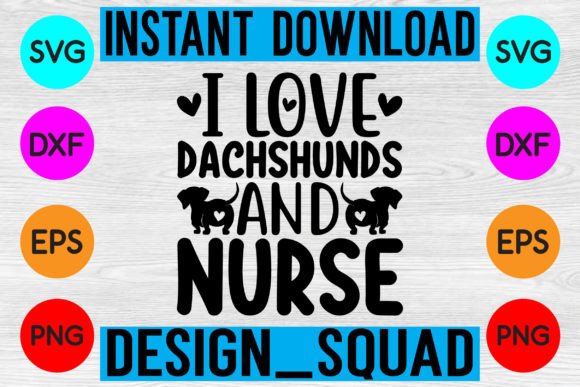
The layout of this design feels balanced, which is crucial for apparel. Often, designs that combine text with illustrations suffer from poor spacing, making the text hard to read or the image look cramped. Here, the integration of the dachshund motif with the nursing theme creates a cohesive visual story. It feels warm, professional yet playful, and approachable. For an Etsy seller or a craft business owner, this mood is gold. It speaks directly to nurses who are proud pet parents, a demographic that frequently seeks personalized gifts and custom workwear.
Since the product description notes that you receive SVG, PNG, EPS, and DXF files, it is important to clarify how these fit into an embroidery workflow. While these are primarily vector and raster graphics used for cutting machines or printing, they serve as excellent references for digitizing or as assets for hybrid projects. If you are using this for a printable mockup to show clients what their custom apparel might look like, the 300 DPI resolution in RGB color mode ensures crisp previews. However, for actual stitching, one must ensure the design has been properly digitized into a native embroidery format compatible with your specific machine, as raw vectors do not contain stitch data.
Real-World Application: The Scrub Cap Test
To truly evaluate I Love Dachshunds and Nurse, I imagined placing it on a curved surface: a nurse’s scrub cap. This is a high-demand item in the commercial embroidery space. The challenge with caps is the limited hoop area and the curvature of the fabric. A design that is too wide will distort when stitched onto a rounded crown. Looking at the proportions of this graphic, it appears compact enough to fit within standard cap hoops without losing integrity.
I also considered its use on a canvas tote bag design. Tote bags are sturdy, but the weave can be coarse. The bold lines of the dachshund silhouette should stand out well against textured fabric, provided the stitch density is managed correctly. If the design relies heavily on fine running stitch outlines, they might get lost in the canvas texture. Conversely, if it uses solid fill stitch areas, it will pop. For a small shop product, versatility is key, and this design seems adaptable to both flat items like towels and structured items like aprons.
Navigating Fabric and Stitch Challenges
Every designer knows that a design looks different on screen than it does in thread. When working with I Love Dachshunds and Nurse, there are specific technical considerations to keep in mind. First, consider the thread colors. Nursing themes often utilize soft blues, pinks, or whites, while dachshunds come in various shades. Ensuring sufficient contrast between the dog, the text, and the background fabric is essential for readability. On dark navy scrubs, for instance, light-colored threads will be necessary, but you must account for potential pull-up or distortion.
Another critical factor is stabilizer choice. If you are applying this to stretchy performance fabrics common in modern medical wear, a cut-away stabilizer is non-negotiable to prevent the design from puckering after washing. For a baby embroidery project, such as a onesie, the feel of the back of the stitching matters. If the design has dense coverage, it might be stiff against sensitive skin. In such cases, testing a softer backing or adjusting the density during digitization is wise.
Be cautious with tiny details. If the original graphic includes very small elements, they may not translate well to embroidery unless simplified. Large blocks of satin stitch can snag easily, so breaking them up with tack-down stitches or converting them to fill stitches might be necessary for durability, especially for items that will undergo frequent industrial laundering.
Commercial Viability and Brand Consistency
For digital product sellers and creative entrepreneurs, the value of a design lies in its ability to generate sales. I Love Dachshunds and Nurse has strong niche appeal. It is not just a generic dog design; it targets a specific professional identity. This specificity builds trust and recognition. When customers see a well-executed version of this on a sweatshirt embroidery sample, they perceive higher quality and attention to detail.
However, before listing finished items or selling the digital assets, you must verify the licensing terms. The description mentions "Quality work" and "Easy to c" (likely cut), but it does not explicitly state commercial usage rights for the embroidery file itself. Always confirm whether the license allows for the sale of physical goods made with the design. This step is vital for maintaining professionalism and avoiding legal issues in your craft business.
Practical Designer Notes for Best Results
Before committing to a full production run, follow these practical steps:
- Test on Scrap Fabric: Always stitch out a sample on the same type of fabric you intend to use for the final finished product. This reveals any tension issues or registration errors.
- Check Contrast: View the design in black and white. If the details disappear, the contrast is too low for certain lighting conditions or fabric colors.
- Verify Hoop Size: Ensure the design dimensions fit comfortably within your machine’s hoop, leaving room for stabilization.
- Inspect Small Details: Zoom in on the vector files to see if any lines are too thin to be practically digitized or cut.
- Confirm File Compatibility: Since the package includes SVG, PNG, EPS, and DXF, remember that these are not native embroidery formats. You will need to use digitizing software to convert them or ensure you have the correct embroidery file types if they were included separately.
In conclusion, I Love Dachshunds and Nurse is a promising asset for designers looking to create heartfelt, niche-specific products. With careful attention to digitization, fabric choice, and stabilizer selection, it can become a standout piece in any embroidery project. It bridges the gap between professional pride and personal passion, making it a strong contender for holiday gifts, boutique branding, and everyday wearables.